Navigating the Hybrid Education Era: Customizing Your Child’s Learning
The rigid five-day school week with standardized curriculum is no longer the only path. A growing number of families are choosing hybrid education — combining traditional school attendance with homeschool components, online curriculum, and community learning co-ops — to create a customized educational experience that fits their child’s specific learning style, pace, and values.
What Hybrid Education Actually Looks Like
The term covers a wide range of models:
Part-time enrollment. Some public and private schools offer part-time enrollment options, allowing students to attend for core subjects while parents supplement with other learning at home. The mix varies — some students attend school two days per week, others four, with home learning filling the gaps.
Learning pods. Small groups of families sharing educational resources — hiring a tutor or teacher together, rotating learning space, sharing curriculum costs. Pods became common during pandemic-era school closures and many families found them more effective than what they replaced.
Homeschool-co-op hybrid. Parents homeschool primarily but enroll their children in homeschool co-ops for specific subjects (science labs, foreign language, music, PE) where group settings or specialist instruction is beneficial.
Online school + home enrichment. Accredited online schools provide structured curriculum with certified teachers, while parents add hands-on, project-based, and values-driven components at home.
Why Families Are Making This Choice
The drivers are varied:
- Children who are academically advanced in some areas and need more challenge than a grade-level classroom provides
- Children with learning differences who need pacing or instructional approaches that standard classrooms can’t accommodate
- Families with values that are poorly aligned with their local school’s culture
- Desire to include real-world skills — financial literacy, practical life skills, entrepreneurship — not covered in standard curricula
- Dissatisfaction with the volume of standardized testing at the expense of deep learning
The research on home-based and hybrid education outcomes is more positive than many people expect. Students in structured homeschool and hybrid programs score comparably to or above traditionally schooled peers on standardized assessments, and the socialization concerns that drive most parental hesitation don’t materialize when families are intentional about peer engagement through co-ops, sports, community activities, and part-time enrollment.
Setting Up a Functional Home Learning Environment
The physical environment matters. Children who do home learning at a kitchen table that doubles as the dinner table have more difficulty maintaining the focus-oriented mindset that structured learning requires.
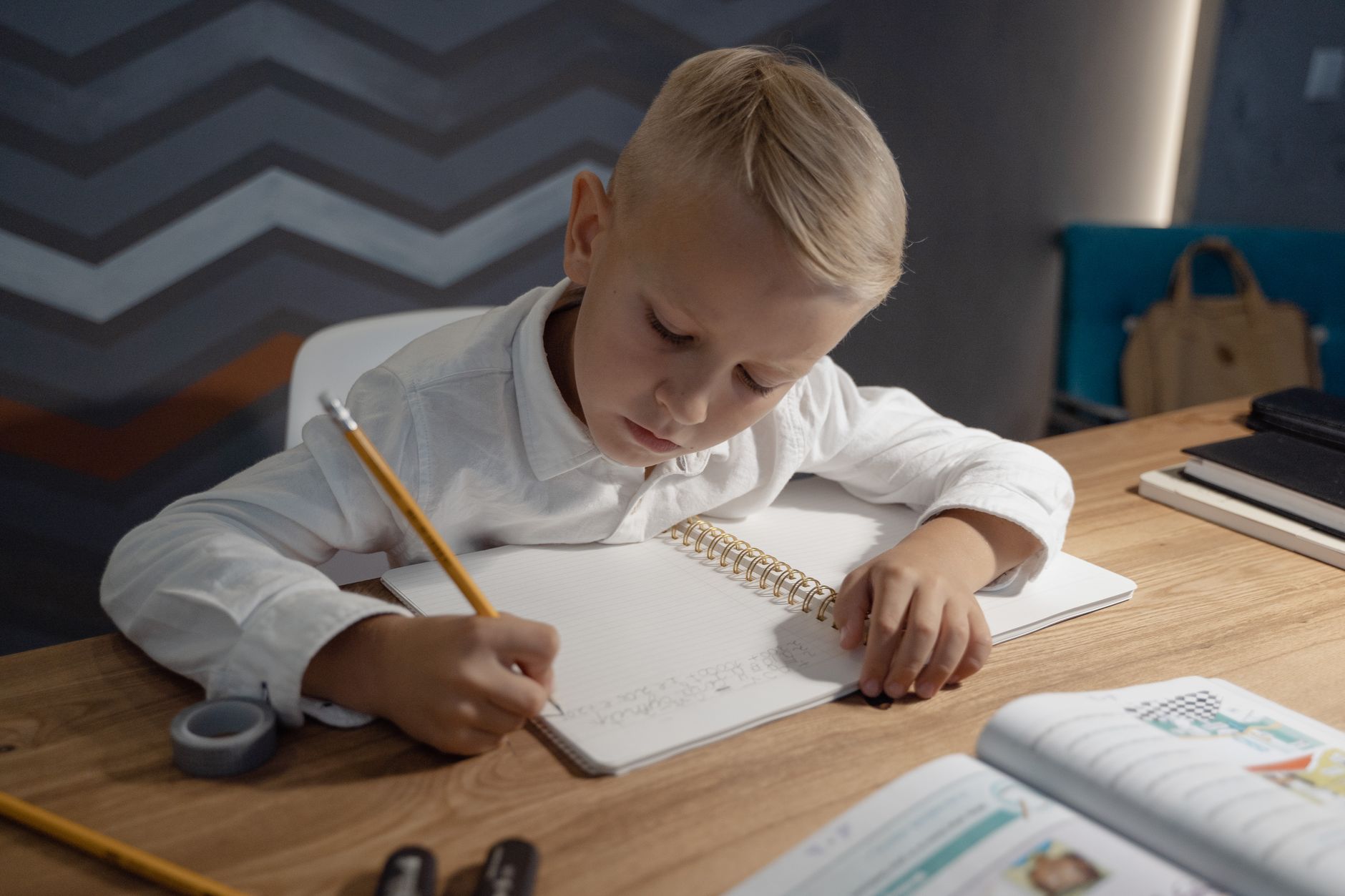
Dedicated space. Even a corner of a room designated specifically for learning — with appropriate lighting, a real desk, and minimal distraction — improves focus and signals to the child that this is work time, not free time.
Ergonomics matter for children too. Kids spending hours at a desk need appropriate seating height, monitor position if they’re using a screen, and periodic movement. The evidence on posture and learning outcomes in children is consistent: discomfort and poor positioning reduce attention and endurance.
Curated materials. Unlike a classroom, you control what’s on the shelves. Build a home library deliberately — age-appropriate nonfiction on topics your child is passionate about, quality reference materials, hands-on STEM kits, and materials that develop skills your school curriculum doesn’t prioritize.
The Socialization Question
The most common objection to home-based education is socialization. The honest answer: it depends entirely on what you do about it. Children who are at home all day with minimal peer interaction develop differently than children who are in regular contact with peers. The question is whether you’re building that contact deliberately.
Successful hybrid families consistently use: sports teams, co-ops, community activities, part-time enrollment for high-interest subjects, neighborhood connections, and family social networks to ensure their children have regular, varied peer contact. This requires more intentional effort than school’s built-in socialization — but it also allows more control over the quality and character of that peer environment.
What Made This Work for Us Was Ruthlessly Cutting the Ambition
We tried a hybrid setup for a stretch, and the version that actually worked was far less elaborate than the version we initially planned. The first iteration had a detailed weekly curriculum map, dedicated subject blocks, the works — and it collapsed within a month under the weight of its own ambition. What survived was much simpler: a consistent morning routine before any screen time, one or two co-op days a week for the subjects that genuinely benefit from a group setting, and looser, more responsive home time otherwise.
The socialization piece required more deliberate effort than either of us expected going in, and it did not happen automatically the way school attendance would have. We had to treat “arrange peer contact” as an actual weekly task on the calendar, not something that would sort itself out. Once we did that consistently, the socialization concerns that worried us initially mostly stopped being concerns.
Build Your Home Learning Space: Adjustable kids’ desks and chairs on Amazon — a proper dedicated learning space makes a measurable difference in focus and endurance for home learners.