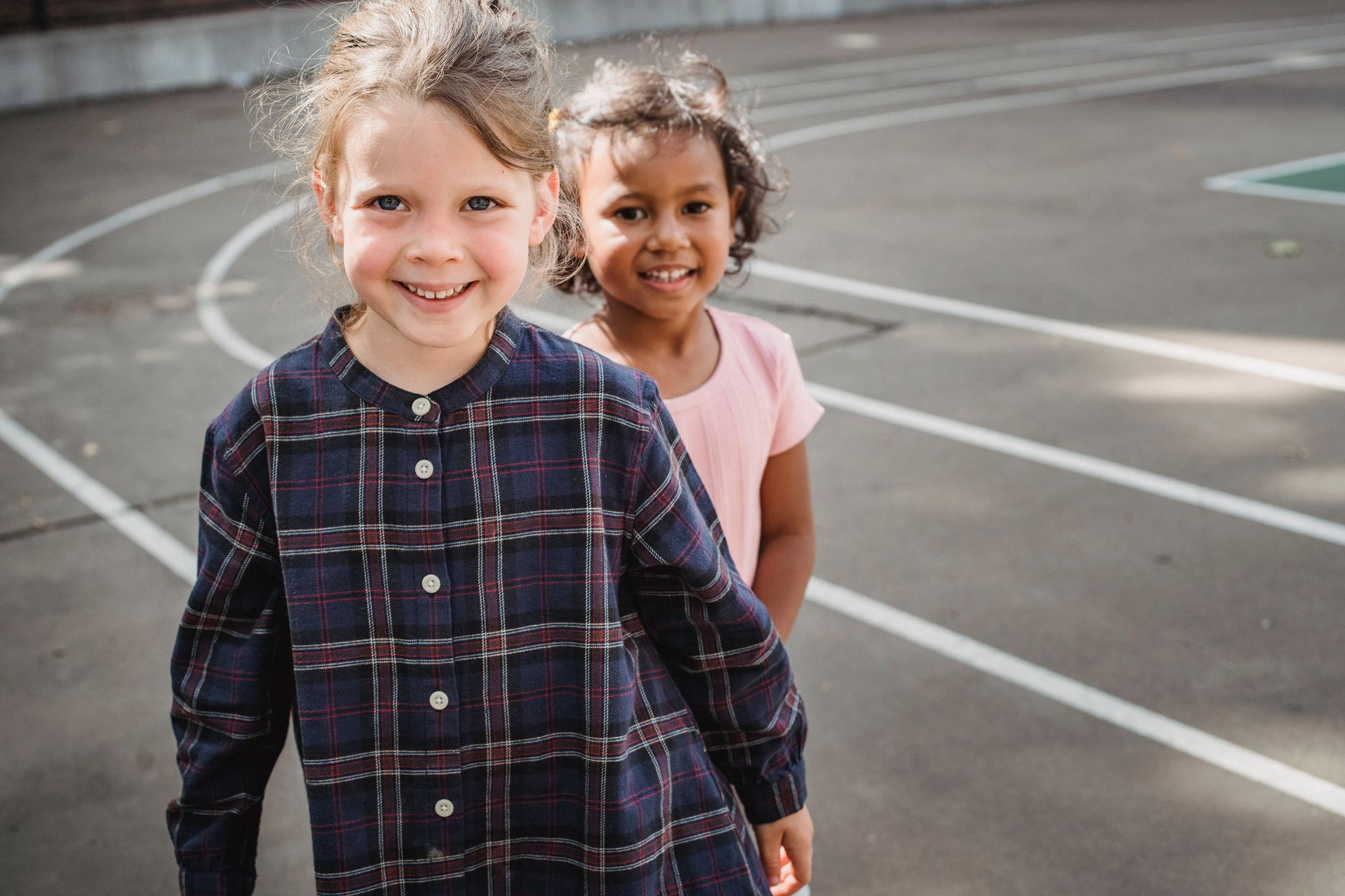
Navigating Your Child’s Friendships: When to Step In and When to Step Back
Children’s friendships are some of the most formative relationships of their lives — the first place most kids learn to navigate conflict, practice empathy, manage rejection, and develop the social skills they’ll use for the rest of their lives. They’re also some of the most anxiety-provoking situations for parents to observe, because the instinct to protect children from social pain is strong, and the line between helpful intervention and harmful interference is genuinely difficult to find.
Here’s what the research on peer relationships and social development actually supports, and a practical framework for knowing when your involvement helps vs. when it gets in the way.
Why Peer Relationships Matter So Much
Developmental psychologists have long understood that peer relationships play a distinct and irreplaceable role in child development — distinct from what parent-child relationships provide. Peers are equal-status relationships: no automatic authority, no unconditional love, no built-in power differential. Navigating these relationships requires skills that parent-child relationships don’t develop in the same way.
The skills built through peer relationships:
- Conflict negotiation with a genuine equal (not just compliance with an authority)
- Perspective-taking — understanding that other people have different thoughts, feelings, and interests
- Rejection and repair — learning that social rupture doesn’t have to be permanent
- Social comparison — understanding where one fits in a peer group and developing identity through that comparison
- Reciprocity — the expectation that relationships require give and take in roughly equal measure
Children who have positive peer relationships show better social competence, higher self-esteem, better academic outcomes, and better mental health in adolescence and adulthood. Children with chronic peer relationship difficulties show elevated risk for anxiety, depression, and academic struggles.
The developmental conclusion: peer relationships aren’t just nice to have. They’re developmentally necessary, and the learning that happens through navigating them — including navigating difficulties — is the point.
The Normal vs. The Concerning
Before discussing intervention, it’s worth distinguishing normal friendship difficulties from situations that warrant more active response.
Normal and developmentally expected:
- Occasional conflict and falling out between friends
- Friendship groups shifting and reorganizing (common at school transitions)
- Periods of social uncertainty or feeling left out
- Preference for solitary play at certain ages or temperaments
- Difficulty with a specific peer or group
- Hurt feelings, exclusion from a single event or activity
Worth monitoring more closely:
- Persistent friendlessness over months with distress about it
- Consistent rejection by the peer group (as opposed to shifting relationships)
- Chronic victimization (repeated targeting for exclusion, teasing, or aggression)
- Significant withdrawal from social situations that were previously enjoyable
- Frequent complaints about the same peer involving a power imbalance
Warrants intervention:
- Bullying — repeated, intentional harm in a relationship characterized by a power imbalance
- Physical aggression
- Cyberbullying that is documented and ongoing
- A friendship that is clearly harmful to your child’s wellbeing (and not merely uncomfortable)
The distinction matters because intervention strategies appropriate for bullying are counterproductive for normal social difficulty.
When to Step Back
The general principle supported by research: allow children to navigate ordinary social difficulty with coaching support rather than direct intervention. A parent who steps in too quickly at every social discomfort:
- Deprives the child of the opportunity to develop social problem-solving skills
- Communicates implicitly that the child can’t handle difficulty
- Creates social dynamics (the child whose parent always intervenes) that can compound peer difficulties
- Models that conflict requires external rescue rather than internal skill
What stepping back looks like:
Your 9-year-old comes home upset because her friend group excluded her at recess. The stepback response is to listen with empathy, help her process the feelings, and then ask questions that support her thinking about how to respond: “What do you want to do about it? What do you think happened? What have you tried?” — rather than immediately contacting the school, calling the other parents, or directing exactly what she should do.
The discomfort your child feels when a friendship is difficult is not a problem to be eliminated. It is the context in which learning happens.
When to Step In
Bullying. The distinction between ordinary conflict and bullying is: repetition, power imbalance, and intentionality. Two kids arguing over a game is conflict. One child repeatedly targeting another for exclusion, name-calling, or humiliation, in a relationship where the victim has less social power and feels unable to stop it — that’s bullying. Adult intervention is appropriate and necessary for bullying. The child being bullied cannot reliably resolve this through peer negotiation skills.
Safety. Physical aggression, threats, or any situation where your child’s physical safety is at risk warrants direct intervention regardless of the social dynamics.
Significant and persistent distress. If your child is showing signs of significant anxiety, depression, or social withdrawal related to peer relationships — not just normal sadness, but functional impairment — that warrants more active support, including potentially consulting a therapist who works with children.
A demonstrably harmful friendship. This is the most complicated intervention situation. A friendship that involves peer pressure toward dangerous behavior, a friend who is consistently unkind to your child, or a relationship with clear negative effects on your child’s wellbeing — these warrant a different response than typical social difficulty. The appropriate intervention is rarely “end the friendship” (which typically drives it underground) but rather increasing your family’s visibility into the relationship and supporting your child in evaluating whether this friendship is good for them.
Coaching vs. Directing
When children bring social problems to you, the most effective parent response is coaching — helping them think through the situation and develop their own response — rather than directing — telling them exactly what to do or do it for them.
The difference:
Directing: “Tell Mia that what she did was mean and that you don’t want to be her friend if she’s going to act like that.”
Coaching: “What do you want Mia to know about how you felt? What do you think would help? What do you want your friendship with her to look like?”
Coaching respects the child’s agency and builds the capacity to navigate future situations. It also produces better outcomes because the response comes from the child’s understanding of the relationship, not an external script.
Coaching is also harder for parents, because it requires tolerating the child’s distress while they work through a problem rather than immediately resolving it. This tolerance — of your child’s discomfort, and of your own discomfort watching them struggle — is itself a parenting skill worth developing.
Building Social Skills Proactively
Rather than waiting for social difficulties to arise, parents can support children’s friendship capacity through:
Play dates structured for connection, not just proximity. Young children in particular need adult-facilitated one-on-one play opportunities where connection can develop. Inviting a potential friend over for a focused activity is more friendship-building than expecting children to connect at a large gathering.
Exposing children to varied social contexts. Clubs, sports teams, community activities, and groups organized around shared interests provide multiple peer contexts — important for children who struggle in one setting, because they create additional opportunities for connection where they may have more success.
Reading and discussing social situations. Books that portray realistic friendship dynamics — conflict, exclusion, repair — give children vocabulary and frameworks for their own experiences. Reading and discussing these stories is a low-stakes way to develop social thinking.
Talking about your own social experiences. When appropriate, sharing your own experiences with friendship difficulty — how you navigated it, what you learned — normalizes the struggle and models that it’s manageable.
Sitting With It Instead of Calling the Other Parent
The recess-exclusion example in this article is close enough to something that actually happened in our house that it’s a little uncanny — a kid coming home upset about being left out by a friend group, and my very first impulse being to consider calling another parent to sort it out on her behalf. I didn’t, mostly because I caught myself mid-impulse and remembered exactly this kind of research. We did the “what do you want to do about it” conversation instead.
The distinction between coaching and directing is harder to hold onto in the moment than it sounds on paper, especially when the coaching answer is slower and less satisfying than just telling her what to say. I still default to directing when I’m tired or distracted, and I’ve had to consciously slow down to ask the open question instead of supplying the script.
What’s made the biggest difference isn’t any single intervention — it’s tolerating my own discomfort watching her sit with a hard week before it resolved itself. That discomfort used to feel like a signal that I needed to act. I’ve come to see it more as a signal that something useful is happening, even though it doesn’t feel that way at the time.
Social-Emotional Development: Best Friends, Worst Enemies by Michael Thompson on Amazon — an accessible, research-based guide to understanding children’s friendships and social development, with practical guidance for parents on when and how to support peer relationships.
The goal isn’t to protect children from the difficulty of peer relationships. It’s to give them the support and skills to navigate that difficulty well — which means resisting the impulse to intervene too quickly, providing coaching and connection when they bring you their struggles, and stepping in decisively when the situation calls for it. That calibration is one of the harder parts of parenting, and getting it approximately right matters.