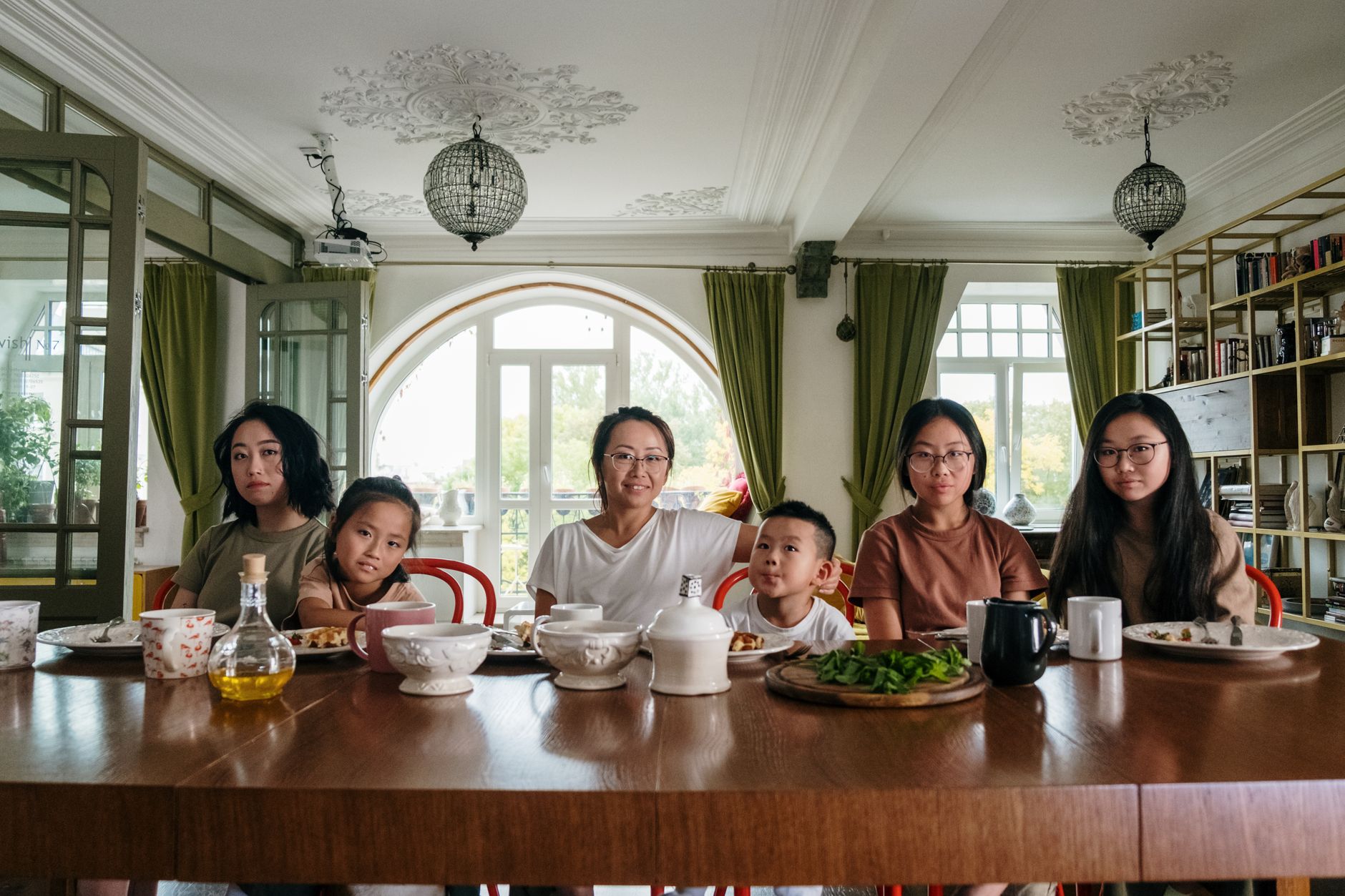
What the Research Says About Family Dinners
Few things in parenting research have as consistent a finding as the family dinner. Across decades of studies, across different methodological approaches, across different populations: eating dinner together regularly correlates with better outcomes for children in a striking range of categories. Lower rates of substance use, better academic performance, reduced depression and anxiety, healthier eating habits, stronger family relationships.
The research is substantial enough that dismissing it as confounded or coincidental requires effort. Here is what it actually shows and what it does not.
What the Research Consistently Finds
The most extensive body of work on family meals comes from the Project EAT studies (Eating and Activity in Teens and Young Adults), a longitudinal study out of the University of Minnesota that has followed participants since 1999. It has produced dozens of papers examining how family meal frequency correlates with adolescent health outcomes.
Consistent findings across Project EAT and replication studies:
Dietary quality. Adolescents who eat family dinners regularly consume more fruits, vegetables, and dairy, and fewer fried foods, soft drinks, and processed foods. The effect is partly explained by what is served — home-cooked meals tend to be nutritionally better than fast food — but research controlling for meal content still finds family meal frequency as an independent predictor of dietary quality.
Reduced substance use. One of the most replicated findings: adolescents who eat dinner with family five or more times per week have substantially lower rates of tobacco use, alcohol use, and illicit drug use compared to those who eat dinner with family two or fewer times per week. The CASA (National Center on Addiction and Substance Abuse) Columbia surveys, which ran for years on this question specifically, showed consistent odds ratios in the 2-3x range — adolescents eating frequently with family were 2-3x less likely to try marijuana or tobacco.
Mental health. Family meal frequency correlates inversely with depressive symptoms, disordered eating, and suicidal ideation in adolescents, with effects that appear after controlling for other family relationship variables. The meal itself appears to serve as a regular, predictable connection point that provides a specific mental health benefit beyond general family closeness.
Academic performance. Higher family meal frequency correlates with better grades, higher academic aspirations, and better school engagement. The mechanism is less clear than with dietary outcomes — likely involves both the cognitive benefits of regular family connection and the practical benefit that families who eat together tend to be more engaged and communicative generally.
The Causation Question
The obvious methodological challenge: families who eat dinner together are different from families who do not in many ways that matter. They tend to have higher incomes, more stable schedules, lower rates of parental substance use, and more engaged parenting styles. Are the good outcomes caused by the meals, or is “we eat dinner together regularly” simply a marker for a well-functioning family?
The honest answer is: probably both. Some of the correlation is confounded. But:
- Studies that attempt to control for socioeconomic status and parenting style still find family meal frequency as an independent predictor
- The mechanism is plausible — regular, structured family connection time has effects on relationships and communication that are distinct from parental warmth generally
- Intervention studies (assigning families to increase meal frequency) show positive effects, though these are harder to run well
The practical implication: even if some of the effect is confounded, increasing family meal frequency is unlikely to cause harm and the evidence for benefit is sufficient to take it seriously.
What the Meal Actually Does
Research on the mechanisms points to a few specific functions:
Communication. Family meals create a structured daily context for conversation that does not depend on a child initiating or a parent finding the right moment. The conversational content of family meals has been studied directly — families who talk more during dinner, who ask open-ended questions, who engage in storytelling, have children with larger vocabularies and better narrative skills. The meal is a daily conversation prompt.
Predictability and security. Regular rituals — same time, same place, same people — provide a predictability that is important for children’s sense of security, particularly during high-stress periods like early adolescence. A teenager who knows dinner is at 6:30 every night has one anchor point regardless of what is happening at school.
Monitoring without interrogation. Parents who eat regularly with their children know their children better — who their friends are, what is worrying them, what is going well. This knowledge develops through accumulated small conversations, not through direct questioning. Family meals provide the accumulated daily contact that makes parents effective monitors without making children feel monitored.
What the Research Does Not Say
It does not say that family dinners fix struggling families or override the effects of serious dysfunction. The research describes a correlation in average populations — not a prescription that overrides all other factors.
It does not specify that the meal has to be dinner, or has to be elaborate, or has to be every day. Research suggests benefits start to appear at 3-4 meals per week. Breakfast together produces similar (if slightly weaker) findings.
It does not say that device-free meals are necessary — though the device research generally suggests that present, attentive adults at meals produce better outcomes than adults who are also on screens.
The Practical Takeaway
The evidence supports the effort required to make regular family meals happen — against schedule pressures, against convenience eating, against the natural entropy of busy family life. The threshold is not perfection. Three dinners a week, cooked at home, without phones at the table, with actual conversation — this is achievable for most families and evidence-backed.
The specific food served matters less than the researchers expected. The conversation matters more.
What Actually Gets Talked About at Our Table
The “monitoring without interrogation” finding matches our experience more than anything else in this research. Direct questions at dinner — “how was school” — reliably get one-word answers. What actually produces real conversation is something unrelated coming up first, a story about someone’s day that has nothing to do with an interrogation, and the actual useful information arriving sideways once the pressure is off.
We’ve had stretches where dinner slipped to three times a week instead of five or six, usually during busy work periods, and it’s noticeable within about two weeks — not a dramatic shift, just a subtle sense of not knowing what’s going on with each other the way we usually do. That’s been enough to convince us the research isn’t just an artifact of comparing different kinds of families; something real changes when the frequency drops, even in the same family.
Recommended reading: The Secrets of Happy Families by Bruce Feiler — a research-driven look at the rituals, including shared meals, that distinguish families with strong bonds and resilient kids.
Sources:
- Neumark-Sztainer, Dianne, et al. “Family meal patterns: associations with sociodemographic characteristics and improved dietary intake among adolescents.” Journal of the American Dietetic Association, 2003.
- The National Center on Addiction and Substance Abuse at Columbia University. The Importance of Family Dinners annual report series.
- Hammons, Amber, and Barbara Fiese. “Is Frequency of Shared Family Meals Related to the Nutritional Health of Children and Adolescents?” Pediatrics, 2011.
- Project EAT study publications — https://www.sph.umn.edu/research/projects/eat/