Building Family Traditions That Actually Stick
Family traditions get a strange amount of hype in parenting advice — treated like childhood magic on one hand, barely examined on the other for what actually makes them stick. Every family I know has tried to start a tradition that died after one year, and has also stumbled into one nobody planned that’s now untouchable.
Here’s what the research says separates the two.
Why Traditions Matter (And Why That’s Not Obvious)
The evidence for family traditions is stronger than you might expect. Research by Barbara Fiese at the University of Illinois has consistently shown that families with regular, predictable rituals show better outcomes across a range of measures: children’s emotional regulation, adolescent identity development, academic performance, and family cohesion during stressful periods.
The mechanism is not magic — it’s predictability and belonging. Family traditions create a sense of what Fiese calls “family schema”: a child’s internal working model of “what our family is like” and “what we do.” This schema provides psychological security during transitions and stress, an anchor for identity when adolescents are constructing who they are, and a sense of membership that contributes to belonging.
The specific content of traditions matters less than their regularity and the sense of shared meaning they carry. A family that watches the same movie every Christmas Eve, argues about the plot every time, and has inside jokes about it is doing something psychologically valuable — regardless of whether the tradition seems particularly meaningful from the outside.
The Two Types: Rituals vs. Routines
Not all family practices are equal. Fiese distinguishes between family routines (repetitive practices that communicate “this is what we do”) and family rituals (practices that communicate “this is who we are”). Both have value, but rituals carry more psychological weight.
Routines: Sunday grocery shopping, Tuesday taco night, bedtime practices. Valuable for predictability and logistics. When disrupted, the practical response is “we’ll have to adjust the schedule.”
Rituals: The way your family celebrates milestones, the specific practices around holidays, the repeated activities that carry meaning beyond their surface content. When disrupted, the emotional response is “something important is missing.” The difference is in the meaning attached, not necessarily the activity itself.
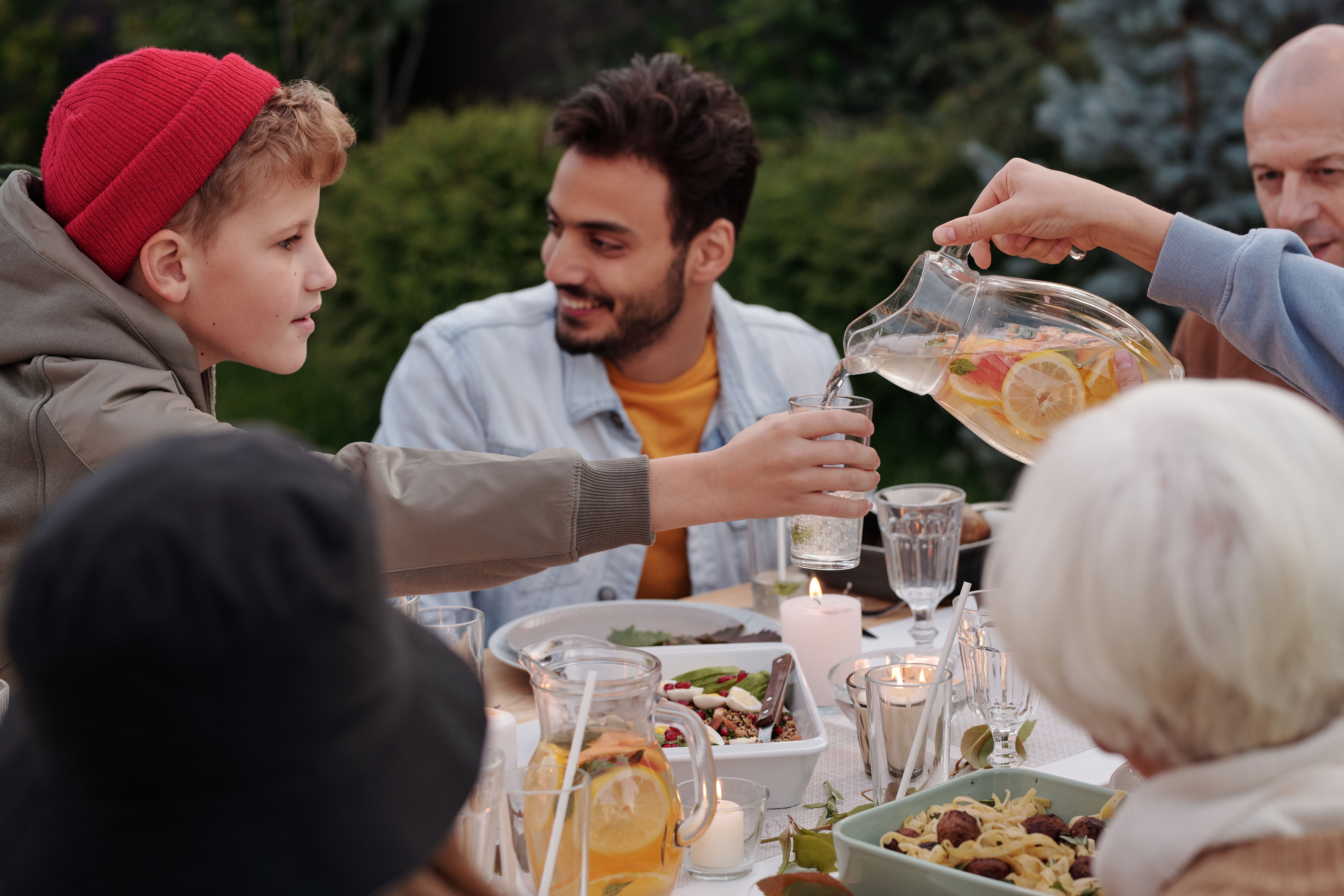
The same activity can be a routine or a ritual depending on how it’s framed and experienced. A weekly family dinner is a routine; a weekly family dinner where everyone shares their “high and low” of the week, where certain seats belong to certain people, where specific foods connect to family history — that’s moving toward ritual.
What Makes Traditions Stick
This is where most intentional tradition-building fails: the gap between a tradition someone decided to create and one that actually becomes part of family culture.
The kids have to care. Traditions imposed entirely by parents on uninterested children don’t become traditions — they become annual battles. The traditions that last are typically ones where children feel some ownership, meaning, or genuine enjoyment. This doesn’t mean children vote on everything; it means their response to the tradition is pleasure, not obligation.
Repetition creates the meaning. The first time you do something, it’s just a thing you did. The third time, it starts to feel like “something we do.” The fifth time, it’s a tradition. The meaning accumulates through repetition — the anticipation, the “remember when,” the inside references — more than it’s present at the beginning. Don’t abandon a tradition because it felt forced the first year.
Simplicity survives. Elaborate traditions require elaborate execution, and life gets complicated. The family that commits to a complex holiday production will eventually scale back when kids get jobs, schedules conflict, and the energy isn’t there. Simple traditions — a particular meal, a particular walk, a particular activity — are more resilient across life’s changes.
Traditions need to evolve. A tradition that worked perfectly when children were 5 and 8 may need modification when they’re 15 and 18. Insisting on traditions that have become embarrassing or childish to adolescents produces compliance without buy-in — and eventually rejection. The traditions that survive into adulthood are ones that the family has adapted rather than insisted on maintaining in original form.
Let them emerge. The most beloved family traditions are often discovered rather than invented. Pay attention to what your family naturally gravitates toward — activities that everyone enjoys and that get repeated because they were fun, not because they were planned. When you notice something like that, name it: “I think we’re starting a tradition.” Naming it and acknowledging it accelerates its consolidation.
Practical Categories Worth Developing
Seasonal and holiday traditions. The most natural entry point. Rather than trying to replicate idealized traditions from media or others’ families, notice what your family actually enjoys about holidays and build around that. The specific food, the specific activity, the specific sequence of events — these become the tradition. The child who is an adult remembering their childhood Christmas will remember the smell of a specific dish and a specific game played on the floor, not the general idea of Christmas.
Milestone celebrations. How your family marks beginnings and endings — the last day of school, a birthday, a graduation, a first driver’s license — creates the emotional texture of transitions. These don’t need to be elaborate; they need to be consistent and acknowledged. The family that always goes to a particular restaurant for birthdays, regardless of which birthday, is building something. The family that ignores birthdays under the press of busy-ness is also building something.
Weekly or daily rituals. Smaller-scale repeated practices that create continuity across ordinary weeks. The specific bedtime routine that children remember in detail into adulthood. The Sunday breakfast that anchors the week. The Friday movie that everyone anticipates. These are often undervalued because they seem mundane, but they are the traditions most children actually carry forward into their own families.
Storytelling traditions. Families that regularly tell their own history — stories about grandparents, about when the parents were children, about family lore — give children a deeper sense of identity and belonging. The research on family storytelling (particularly work by Marshall Duke and Robyn Fivush at Emory) found that children who knew more about their family history showed better psychological outcomes. The “Do You Know” scale — 20 questions about family history — was more predictive of child resilience than many individual child factors.
The Failure Modes
Perfectionism. The tradition that has to be done exactly right, with an elaborate setup, and becomes a source of stress rather than connection. Traditions that rely on perfect execution don’t survive imperfect years — and all years have imperfections.
Forced participation. The adolescent who is made to participate in a tradition they’ve outgrown, without any acknowledgment of their developmental stage or input into adaptation, becomes the adult who avoids the tradition. Negotiated evolution is better than enforced continuity.
Comparison to other families. The tradition that exists to match what other families appear to do, rather than what your family actually enjoys, will feel hollow. Social media has made this worse — the performance of tradition is not the same as the substance of it.
Giving up after one bad year. A holiday that went sideways because of illness, conflict, or logistical failure is not evidence that the tradition doesn’t work. Most beloved traditions have years that didn’t work. The continuity across those years is part of what makes them traditions.
The Traditions That Actually Stuck for Us
We’ve tried to intentionally build traditions and we’ve stumbled into them accidentally. The intentional ones have a mixed track record. The accidental ones are the ones our kids talk about.
The one that emerged without planning: Friday night homemade pizza. It started during a stretch of busy weekdays when cooking felt like one more demand, and Friday pizza was the path of least resistance. At some point we noticed the kids were asking about it on Thursday afternoons. We started letting them each pick one topping. Now the topping negotiation is half the tradition — there’s a whole politics to it, recurring arguments about whether pineapple is acceptable (it’s not, per family consensus), and a general atmosphere of Friday being something specific rather than just the end of the week. We did nothing to create this. We noticed it was happening and got out of the way.
The intentional tradition that almost died: we started a “high-low” conversation at Sunday dinner — everyone shares the high point and low point of their week. The first month felt forced and everyone gave one-word answers. We kept doing it. By month three it was producing real conversation. By year two it was the dinner format our kids assumed was happening. The middle period — where it feels forced and you’re not sure it’s worth it — is where most intentional traditions die. In our experience, persistence through that period is the whole game.
The birthday tradition we got right: the birthday person picks the dinner (cooked at home, from scratch), picks the dessert, and gets to choose a family activity for the weekend. No elaborate parties, no competing with what other kids are doing — just the birthday person getting to direct the family for their day. This scales from age 5 to age 17 without modification, which is rare for a tradition. The older kids still pick the same things they did at 8, mostly, which tells you something about what they actually want.
One that failed completely: an elaborate Advent calendar tradition we tried to build around December. Too many moving parts, required too much preparation, felt like pressure. We abandoned it after two years. Not every intentional tradition is worth forcing.
Building Family Culture: The Secrets of Happy Families by Bruce Feiler on Amazon — Feiler applies research from organizational psychology, military, and therapy to family life, with specific, evidence-based recommendations for the practices (including traditions and rituals) that correlate with family wellbeing and cohesion.
I have no idea if pizza night survives another ten years. Kids grow up, get their own Friday nights. But I’d bet money the high-low question does — it’s cheap, it takes ninety seconds, and by now it’s just how we ask each other how things are going.