How to Choose After-School Activities for Your Child (Without Overscheduling)
After-school activities represent one of the more complicated decisions in modern parenting — complicated enough that the research literature on child development and the cultural pressure around extracurriculars are often in direct conflict. Understanding both helps parents make choices that serve their children rather than anxieties about their children’s futures.
What the Research Says About Activities
The evidence for extracurricular activities on child development is genuinely positive but more specific and bounded than popular enthusiasm suggests.
Benefits that are well-supported:
- Skill development (the obvious one — sport teaches athletic skills, music teaches musical skills)
- Structured peer interaction and relationship development outside the school context
- Identity formation — activities are a significant source of “I am someone who does X”
- Self-efficacy through mastery — getting better at something through effort
- Physical fitness (for athletic activities)
- Time structure that reduces unsupervised time, which correlates with lower-risk behavior in adolescence
Benefits that are overstated:
- College admissions advantage from activity participation — the advantage accrues to high achievement in an activity, not participation per se. A mediocre pianist with 8 years of lessons is not more competitive than a non-musician applicant
- General cognitive benefits from music study — the Mozart effect and related claims don’t hold up well in controlled research
- Character development as an automatic outcome of sports participation — coaching quality and team culture matter enormously; some sport environments actively undermine the character development families seek
Costs that are underweighted:
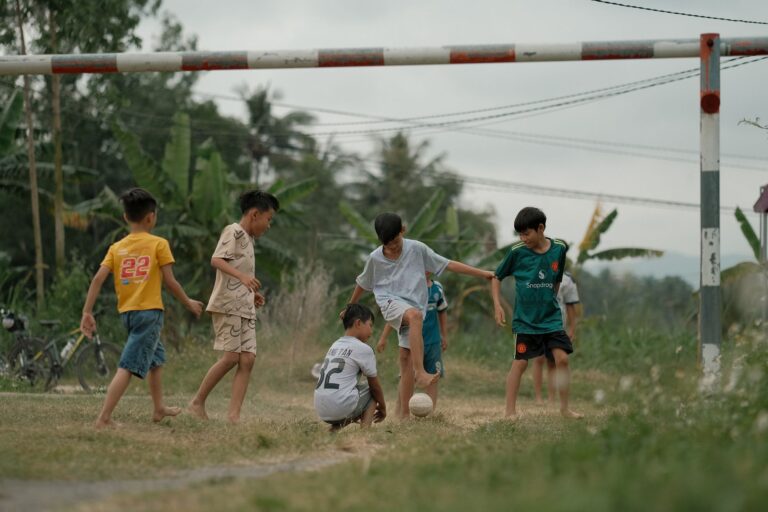
- Opportunity cost of unstructured time — research on play, particularly unstructured, child-directed play, shows significant developmental benefits that diminish as schedules fill
- Family stress from logistics — scheduling multiple children in multiple activities affects family cohesion, dinner frequency, and parental stress
- Financial cost — competitive sports, music lessons, and club activities have significant financial demands that affect family resources broadly
- Burnout — children pushed into high volumes of structured activity, particularly activities primarily driven by parental interest, show higher rates of activity dropout and recreational disengagement in adolescence
The Overscheduling Problem
The concern about childhood overscheduling is not new, but the evidence has accumulated. The developmental psychologist David Elkind coined the term “hurried child” in 1981; the concern has only intensified as competitive pressure around activities has increased.
What overscheduling actually does to children:
Reduces unstructured time to near zero. Unstructured play — child-directed, without adult-defined objectives — is where children develop autonomy, creativity, intrinsic motivation, and social negotiation skills. A schedule full of structured activities with adult supervision and defined objectives doesn’t provide what free play provides. Research by Angeline Lillard and others shows robust developmental benefits of free play that structured activities don’t replicate.
Reduces family time. Evenings and weekends filled with practices, games, and lessons reduce the family dinner frequency, the casual time, and the unstructured parent-child time that correlates with child wellbeing. The logistics of activity management also increases parental stress, which affects family dynamics.
Externalizes motivation. Heavy activity schedules driven by parental investment rather than child interest develop extrinsically motivated children — doing the activity for the parent’s approval, the trophy, the resume line — rather than intrinsically motivated ones. Research on motivation consistently shows that intrinsic motivation produces more sustained engagement, more skill development, and better outcomes than extrinsic motivation.
Leaves no margin. Children need downtime, boredom, and transition time. A fully-scheduled child has no capacity to absorb the unexpected — illness, a social crisis, a family need — without significant disruption.
A Practical Framework for Deciding
Start with the child’s interest, not the activity’s prestige. The activity that a child is genuinely enthusiastic about will be practiced more, learned faster, and sustained longer than the activity a parent has selected for its developmental credentials. Ask your child what they want to do, not what you want them to want to do.
One or two activities per season, maximum. Most developmental psychologists recommend no more than one to two structured activities per season for school-age children, with younger children at the lower end. This leaves margin for homework, free play, family time, and the unexpected.
Watch for the warning signs of too much:
- Child is consistently resistant before the activity rather than occasionally
- Family dinner is happening fewer than three times per week
- Your child says they’re tired but you don’t know from what
- You’re driving more than an hour per day for activity logistics
- Your child has no time they describe as “free” or “mine”
Protect one non-scheduled day per week. A day with no planned activities — where children can direct their own time — is not wasted time. It’s developmentally valuable time. Protecting it is a parenting decision worth making deliberately.
Evaluate fit, not investment. Families often continue activities past the point of genuine engagement because of sunk cost — the equipment purchased, the season already paid, the level already reached. These are not reasons to continue an activity a child has outgrown or never genuinely chose. Stopping an activity that isn’t working is not failure; it’s appropriate responsiveness to your child.
Age-Specific Guidance
Ages 4-6: Exploration over specialization. Activities at this age should be fun, low-pressure, and varied. The goal is exposure and the development of basic coordination, not excellence. Beware of programs that emphasize competition at this age — it’s developmentally premature and often counterproductive.
Ages 7-10: Emerging interests become clearer. Children at this age can communicate more reliably what they enjoy and what they don’t. One activity they’ve chosen, practiced consistently, and show genuine interest in is the right model. Multi-sport or multi-activity participation is appropriate; early specialization in a single sport or activity is not supported by development research and is associated with higher burnout and injury rates.
Ages 11-14: Self-direction increases. Adolescents are forming identity in part through activity identification — “I am a soccer player,” “I am a musician.” Allow them more say in which activities they pursue and which they discontinue. This is the age where genuine commitment to a primary activity can produce meaningful skill development if the child chooses it.
Ages 15-18: Self-direction primary. Teenagers who are in activities they haven’t chosen are in activities they will eventually leave. Support genuine interest, help develop depth in what they care about, and let go of activities they’ve outgrown or never chose.
Choosing Specific Activities
When a child has expressed interest in a specific activity, evaluate it:
The coach or instructor matters most. The quality of instruction, the culture of the team or studio, and the approach to youth development — whether the coach emphasizes effort and improvement vs. performance and winning — matter more than the activity itself for developmental outcomes. Visit, observe, and ask other parents before committing.
Look for skill development over trophies. Programs that award participation trophies and focus on positive experience at younger ages, then shift to genuine competition as children age, have the developmental sequence right. Programs that emphasize winning at age 7 have it backwards.
Consider the peer group. Activities provide peer contexts that matter. The teammate who models hard work, the bandmate who shares enthusiasm, the teammate who introduces substance use — the peer group your child finds in an activity is part of what they’re getting.
Where We Got the Balance Wrong
We overscheduled for about a year and a half without really noticing it happening — one kid in club soccer, another in swim, both in an instrument, and at some point we were doing five practices a week across two kids plus games on weekends. Nobody sat down and decided this; it just accumulated one enrollment form at a time, each one reasonable on its own.
What tipped us off wasn’t a research article — it was realizing we hadn’t had a Tuesday dinner together as a family in about six weeks. Once we saw it that plainly, we cut swim (the one that had been added most recently and had the least buy-in) and kept soccer and the instrument. The kid on swim wasn’t devastated; if anything there was relief we hadn’t anticipated.
The one-unscheduled-day rule is the thing we actually stuck with afterward, and it’s held up better than any of our other attempts at moderation. Saturday is protected. No practices get scheduled on it if we can help it, and when a coach has pushed a Saturday practice, we’ve said no more than once. It’s a small thing that’s made a bigger difference than I expected going in.
Family Life and Balance: The Hurried Child by David Elkind on Amazon — the foundational critique of childhood overscheduling, updated through multiple editions. Provides the developmental context for understanding why unstructured time and child-led play matter alongside structured activities.
We still second-guess the swim decision sometimes — she was actually pretty good at it. But six weeks without a Tuesday dinner is the number that made the call for us, and I’d make the same trade again.