Raising Kids Who Read in a Screen-First World
Reading for pleasure is in measurable decline among children and teenagers in the United States. The trend predates smartphones but has accelerated alongside them. The implications go beyond literacy — sustained reading builds vocabulary, attention span, inferential reasoning, and empathy in ways that passive screen consumption does not replicate, and the research on this is fairly consistent.
The question is not whether reading matters. It is what parents can actually do about it when the competition for attention is a device designed by teams of engineers to be maximally engaging.
Why It’s Hard
The honest answer is that books cannot compete with social media and gaming on the terms those platforms are optimized for. A novel asks you to sustain attention across hundreds of pages, build a mental model of characters and world, tolerate ambiguity and delayed gratification, and bring active imagination to what is described. A TikTok feed provides novelty every 15 seconds, requires no sustained effort, and delivers dopamine hits on a variable reward schedule.
The brain adapts to what it practices. Children who spend most of their leisure time in fast-switching, high-stimulation media develop different attentional habits than children who spend significant time reading. This is not a moral judgment — it is what the cognitive science on attention suggests.
Reading is also a skill with a learning curve that takes years to pay off. A child learning to read is doing effortful, frustrating work that does not feel rewarding until fluency is achieved. Getting through that curve requires support.
What Actually Works
Read aloud past the age when it seems necessary. Most parents stop reading aloud to children when those children can read independently — usually around first or second grade. This is a mistake. Reading aloud to children well into middle school (and even high school) builds vocabulary at levels above their independent reading level, exposes them to longer and more complex narratives, and importantly, creates positive emotional associations with stories and reading. The child who associates reading with a warm, pleasant experience with a parent is more likely to seek it out independently than the child who associates it with solitary effort.
Let them read what they want. The instinct to redirect children away from “low-quality” genre fiction — graphic novels, fantasy series, humor — toward literary fiction is counterproductive. The goal is to build a reading habit and a reader identity. A child who reads a hundred Captain Underpants books is building fluency, developing a reading habit, and experiencing the pleasure of being lost in a story. That is the foundation that eventually supports more complex reading. The gate-keeping approach — only approving certain books — reliably creates readers who resent reading.
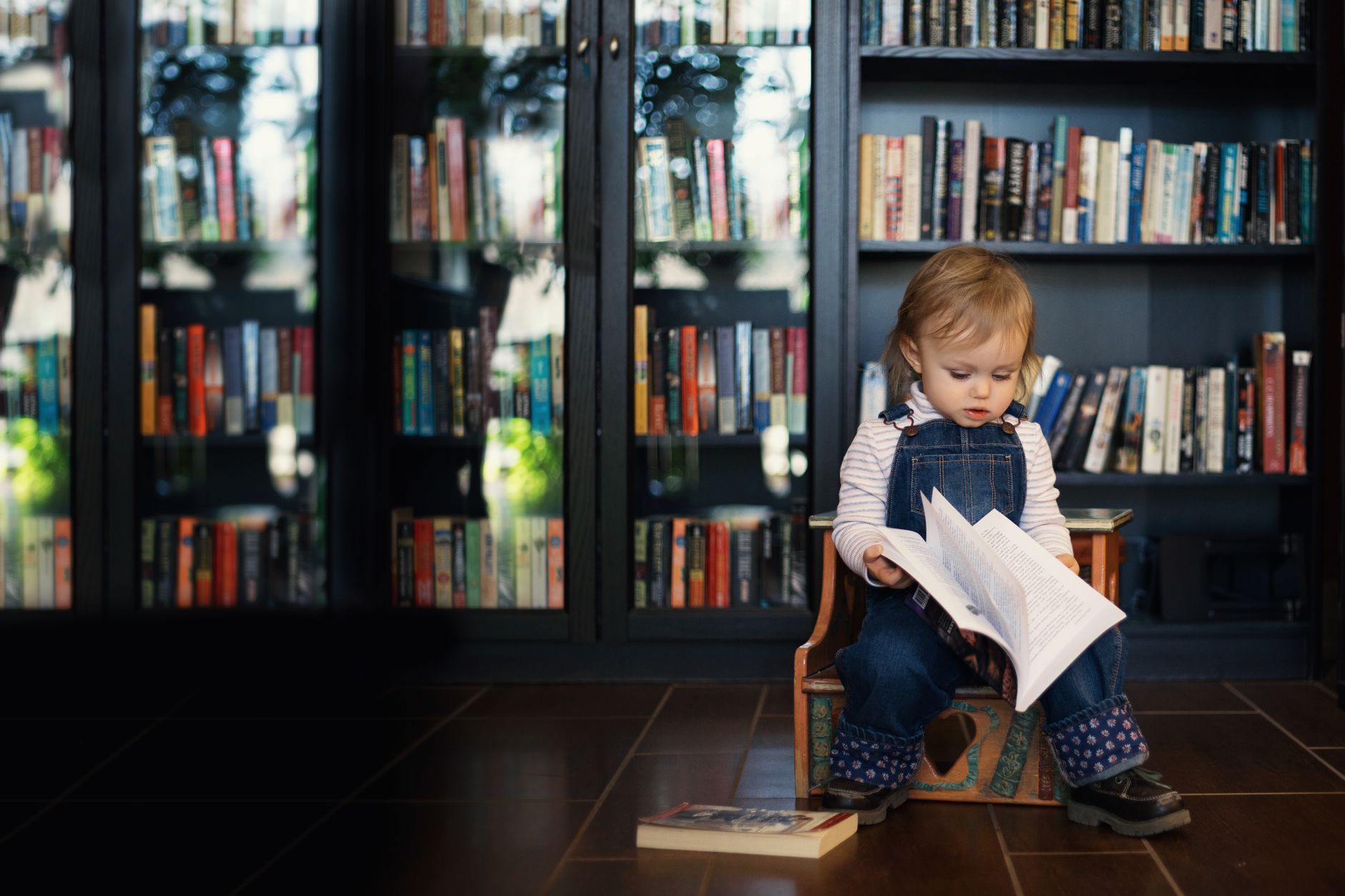
Books physically in the environment. The presence of books in a home correlates with children’s academic outcomes even after controlling for parental education and income. The mechanism is probably multiple: books signal that reading is valued, they reduce the activation energy required to start reading, and they create incidental exposure and curiosity. Bookshelves in common areas, books on nightstands, books in the car — the research supports this as an independent positive factor.
Protect reading time. This means creating conditions where reading is the obvious choice: screen-free evenings, sustained quiet time, a comfortable reading spot. Children will not independently carve out reading time from a schedule packed with more stimulating options. The habit develops in the space adults create for it.
Be a reading model. Children observe what adults actually do, not what adults say. A parent who tells a child that reading is important while exclusively using screens in their leisure time is sending a mixed signal. The parent who reads — visibly, regularly, for pleasure — is modeling the behavior they want to see.
Library cards and bookstore trips. Choice and ownership matter. Children who choose their own books, browse, and experience the anticipation of a new book are building a different relationship with reading than children who are assigned it. Regular library trips or modest bookstore allowances create agency around reading.
The Digital Reading Question
E-readers and audiobooks complicate the picture.
E-readers like Kindle or Kobo offer a reading experience closer to physical books than a tablet or phone — single-purpose device, e-ink screen, limited distractions. The research comparing digital and print reading outcomes is mixed and somewhat context-dependent. For sustained recreational reading, an e-reader is probably comparable to physical books in most measures. For study and annotation, print tends to produce better retention and comprehension in the literature, possibly because of the physical engagement and spatial memory cues.
Audiobooks are a legitimate gateway for reluctant readers and for books above a child’s independent reading level. The experience of being in a story, following a narrative arc, caring about characters — this is what reading is for, and audiobooks deliver it. They do not build decoding fluency, so they are a complement rather than a substitute for printed text in developing readers. For fluent readers, they expand access to books during commutes, exercise, and tasks where physical reading is not possible.
Realistic Expectations
You are not going to engineer a child who prefers books to screens in an environment where screens are optimized by billion-dollar companies to be irresistible. The goal is to raise a child who can read fluently, has experienced the pleasure of being absorbed in a good book, and has the capacity for the sustained attention reading requires — even if they do not choose it as their primary leisure activity.
That is an achievable goal and a worthwhile one. The path is more about environment, modeling, and early positive experience than about rules and restrictions.
What Actually Got a Reluctant Reader Reading in Our House
One of our kids resisted independent reading hard for a couple of years — not a decoding problem, just no interest in sitting still with a book when a screen was available. What changed it wasn’t a better book recommendation. It was switching to audiobooks for long car rides, which turned a dead stretch of time into story time by default, with no effort required from him. He got hooked on a couple of series that way before he ever picked up the print versions on his own.
The “let them read what they want” advice was harder for us to follow in practice than it sounds on paper. There was a real temptation to steer away from a graphic-novel phase toward something we considered more substantial, and it took a deliberate decision to bite our tongues. In hindsight, the volume of reading during that phase mattered more than the content, exactly as the research suggests, even though it didn’t feel that way at the time.
Recommended reading: The Read-Aloud Family by Sarah Mackenzie is the definitive practical guide to building a reading culture at home — covers book selection by age, how to make read-aloud a consistent family habit, and why it works even with older kids.
Sources:
- Mol, Suzanne, and Adriana Bus. “To Read or Not to Read: A Meta-Analysis of Print Exposure From Infancy to Early Adulthood.” Psychological Bulletin, 2011.
- Evans, M.D.R., et al. “Family scholarly culture and educational success: Books and schooling in 27 nations.” Research in Social Stratification and Mobility, 2010.
- Trelease, Jim. The Read-Aloud Handbook. Penguin, 2019.
- National Literacy Trust, children’s reading research — https://literacytrust.org.uk/research-services/research-reports/